Handwoven vs Machine-Made Textiles: How to Tell the Difference
“Handwoven” is one of the most overused terms in home textiles, and not every product labelled that way is genuinely made on a hand loom. For wholesale buyers, being able to tell the difference matters both for accurate pricing and for what you can honestly tell your own retail customers.
Quick Answer
Genuine hand-loomed textiles show small, natural irregularities in pattern alignment and weave density; machine-made pieces are near-perfectly uniform.
Hand-loomed ikat involves dyeing yarn in pattern before weaving, a slow process that shows subtle blurring at pattern edges — a hallmark of the technique, not a flaw.
Machine printing can mimic an ikat look but sits flat on the surface of the fabric rather than being woven into the yarn itself.
Genuine handwoven textiles command a meaningfully higher wholesale price than machine-made equivalents, reflecting the labour and time involved.
What Makes a Textile "Handwoven"
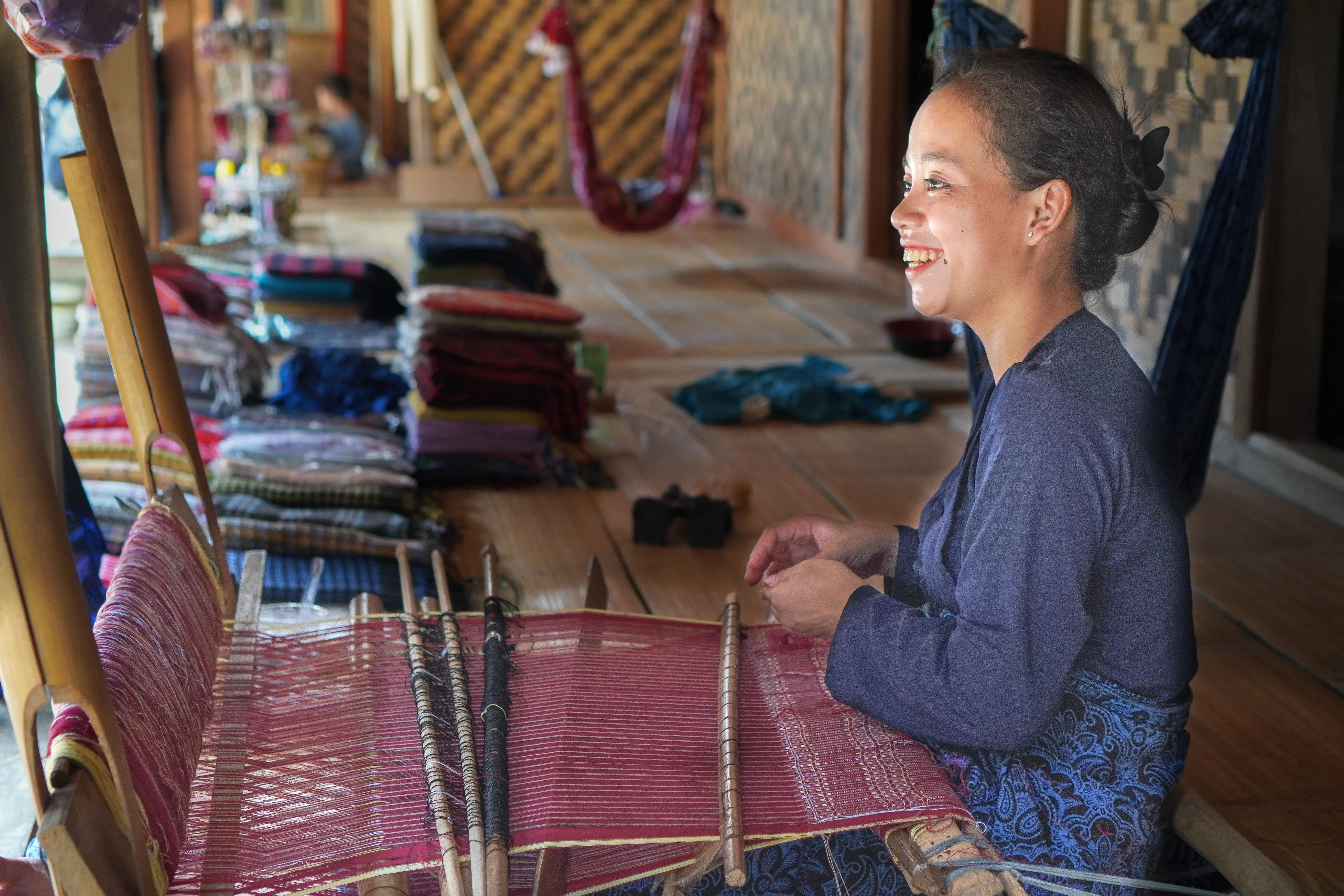
A genuinely handwoven textile is produced on a manual loom, with a weaver controlling the weft thread by hand, row by row. This is inherently slower and less uniform than industrial, powered-loom production, and that lack of perfect uniformity is actually one of the clearest signs of authenticity. Hand-loomed ikat — a technique associated with regions like East Nusa Tenggara — involves dyeing sections of yarn in a specific pattern before it’s woven, a technically demanding process that requires the weaver to align dyed yarn precisely as they work. The result typically shows a slight, characteristic blurring at the edges of the pattern, where the dyed sections don’t align with mathematical perfection — this is a hallmark of genuine hand-loomed ikat, not a defect.
What Machine-Made Imitations Look Like
Machine-printed or industrially woven textiles designed to mimic an ikat or handwoven look can be visually convincing at a glance, but they differ in a few identifiable ways. Printed “ikat-style” fabric has the pattern applied to the surface of an already-woven fabric, meaning the design sits on top of the weave rather than being part of the yarn structure itself — this can sometimes be seen by checking the reverse side of the fabric, where a genuinely woven pattern will show through, while a printed pattern often looks faded, incomplete, or altogether absent on the back. Machine-woven textiles, even when patterned in the loom rather than printed afterward, tend to show near-perfect repetition and pattern alignment, lacking the small human irregularities of a hand-loomed piece.
Why the Difference Matters for Pricing
Hand-loomed textiles take significantly longer to produce than machine-woven or printed equivalents — a single piece can represent days of skilled labour — and this is reflected in wholesale pricing. Buyers should expect genuine handwoven textiles to carry a meaningfully higher price than machine-made pieces of similar size, and a supplier offering “handwoven” textiles at prices comparable to machine-made goods is worth questioning directly, since the economics of hand-loom production rarely support that price point without something being misrepresented.
This distinction also matters for how you position and price the product to your own customers. Selling a genuinely hand-loomed piece at a price that doesn’t reflect the labour behind it undervalues both the product and the artisans who made it; conversely, being able to accurately describe the technique and origin of a piece supports a stronger, more defensible price point at retail.
Questions to Ask a Textile Supplier
Is this piece woven on a hand loom, a powered loom, or printed onto woven fabric?
If it’s ikat, is the pattern created through yarn-dyeing before weaving, or applied afterward?
Which region and weaving tradition does this specific pattern come from?
Can I see the reverse side of a sample to check how the pattern is constructed?
A supplier confident in the authenticity of their textiles will generally answer these clearly and be happy to provide samples for closer inspection before a full order is placed.
Building This Into Your Range
For retailers, it’s worth stocking genuinely handwoven pieces as a distinct, clearly positioned tier from any machine-made or printed textiles in a range, rather than blending them together under a single “boho textile” label. This gives customers an honest choice and lets genuinely handcrafted pieces command the price they deserve. Our piece on cushion cover trends looks at specific patterns and formats currently performing well in this category, and our broader buyer’s guide to Indonesian handicrafts covers quality indicators across other materials too.
Bali Bhumi sources genuinely hand-loomed textiles direct from weaving communities in East Nusa Tenggara, and can speak in detail to the technique and origin behind every pattern.Get in touch to discuss your range, or browse our textiles catalogue.