Natural Home Styling: 5 Ways to Incorporate Handwoven Textiles into Modern European Interiors
Modern European interiors increasingly embrace natural materials and artisan craftsmanship, yet many homeowners hesitate to introduce handwoven textiles, fearing cultural clash or visual overwhelm. These five strategic approaches demonstrate how sustainable home decor from Indonesian artisans enhances contemporary spaces with warmth, texture, and meaningful beauty.
1. The Layered Neutral Approach
Begin with handwoven textiles in natural, undyed tones that complement minimalist Scandinavian aesthetics. Organic cotton cushions in cream, beige, and soft grey create textural interest without disrupting colour schemes. The subtle variations inherent in handcrafted home accessories add depth that mass-produced items cannot replicate.
Layer multiple neutral pieces to build sophisticated dimension. Combine smooth organic cotton with textured handwoven throws, establishing tactile variety that invites touch and creates cosy atmospheres essential to hygge living. This foundation allows your sustainable home design to evolve without requiring complete redesigns.
Position neutral handwoven textiles as anchoring elements in living rooms and bedrooms. A large natural-toned throw draped over a simple sofa becomes a statement piece through texture alone, proving that eco-friendly home decoration need not sacrifice minimalist principles.
2. Strategic Colour Accents
Once neutral foundations establish harmony, introduce colour through carefully selected accent pieces. A single handcrafted cushion in deep indigo or warm terracotta provides focal points without overwhelming clean European interiors. Natural dyes create sophisticated, muted tones that avoid the artificiality of synthetic colours.
Follow the 80/20 rule: maintain 80% neutral tones whilst allowing 20% colour through artisan-made textiles. This ratio preserves visual calm whilst adding personality and warmth. Change accent colours seasonally—rich earth tones for autumn, cooler blues for summer—keeping spaces fresh without major investments.
Indonesian artisan pieces featuring subtle geometric patterns in single colours work particularly well as accent elements. The pattern adds visual interest whilst the monochromatic palette maintains cohesion with contemporary design aesthetics.
3. Functional Beauty in Living Spaces
Incorporate handwoven textiles through practical applications that honour both form and function. Bamboo-backed cushions support comfortable seating whilst showcasing traditional weaving. Organic cotton throws provide warmth during chilly evenings, draped casually over armchairs or folded neatly on ottomans.
Table runners crafted from handwoven natural fibres protect surfaces whilst defining dining areas. These sustainable home accessories transition seamlessly between everyday use and special occasions, proving investment pieces need not remain decorative only.
Window treatments using sheer handwoven cotton filter light beautifully, creating soft, diffused illumination that enhances European apartments’ often limited natural light. Unlike heavy synthetic curtains, these natural home textiles maintain airiness whilst providing privacy.
4. Bedroom Sanctuary Creation
Transform bedrooms into restful retreats using layers of handcrafted textiles. Start with organic cotton bedding as your foundation, then add handwoven throws at the foot of beds for textural contrast. Place artisan-made cushions strategically—two or three maximum—to avoid cluttering serene sleeping spaces.
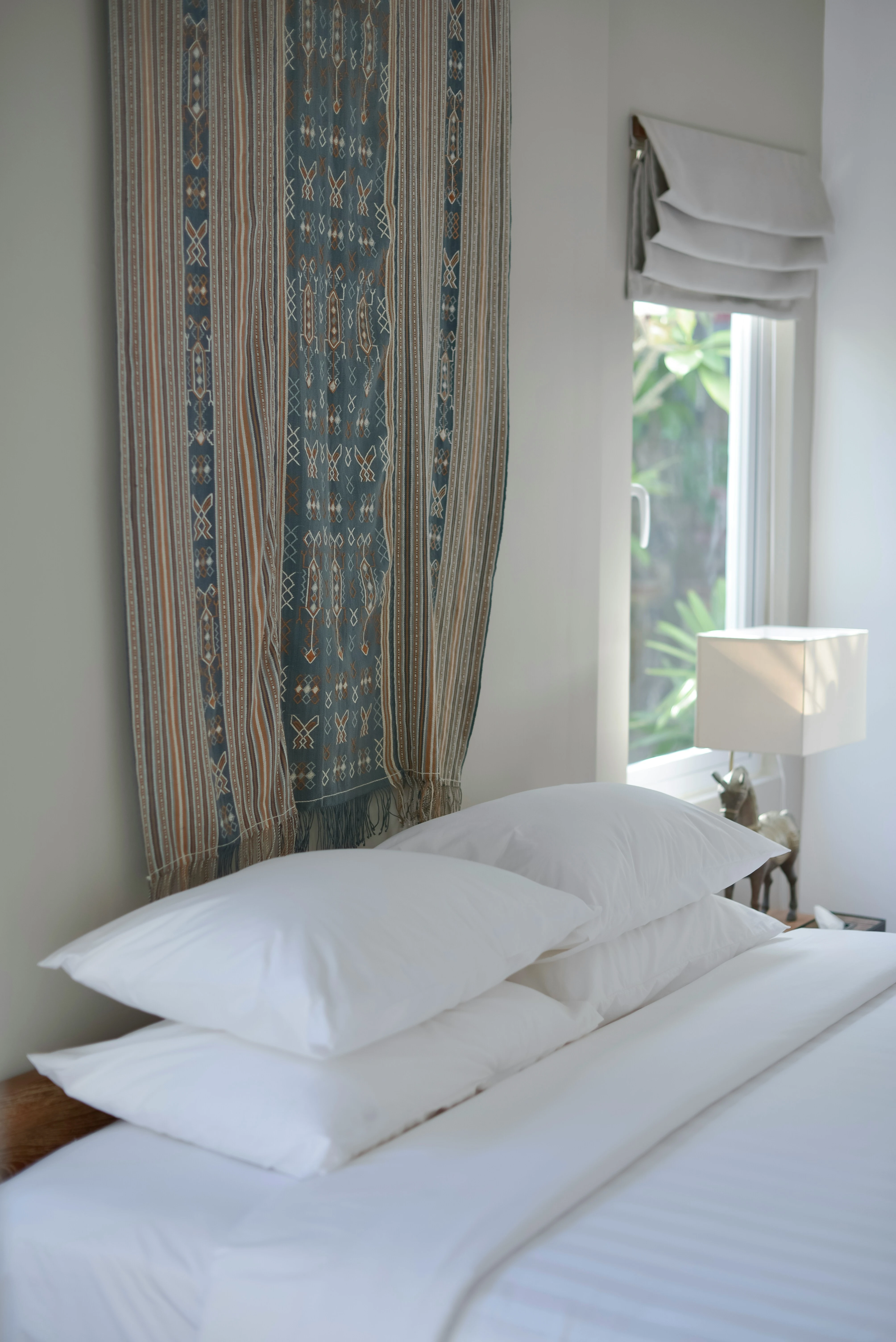
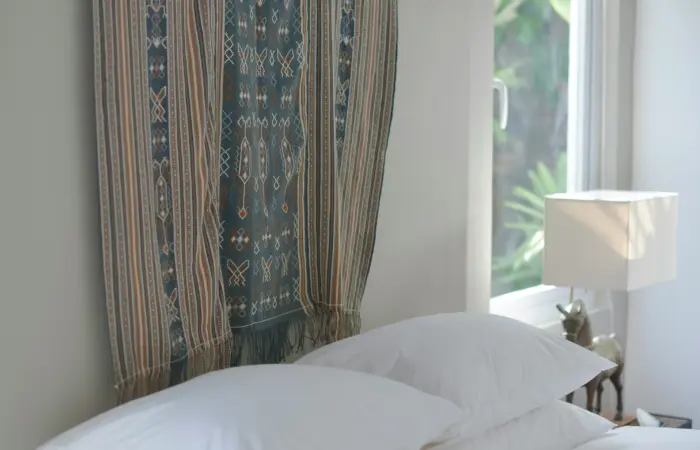
Handwoven wall hangings serve as headboard alternatives in minimalist bedrooms, adding warmth and cultural interest without overwhelming compact spaces. Choose pieces with simple geometric patterns or natural colour gradations that complement rather than compete with your existing palette.
Natural material floor rugs crafted by Indonesian artisans anchor bedroom spaces, defining areas whilst adding softness underfoot. These sustainable home design elements work particularly well in open-plan apartments where they delineate sleeping zones within larger spaces.
5. Gallery Wall with Textile Art
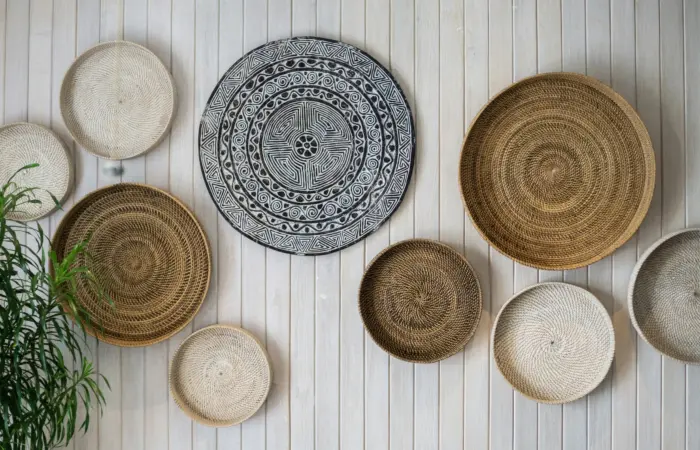
Elevate handwoven textiles from functional items to celebrated art through thoughtful display. Frame smaller woven pieces or stretch them over canvas boards, creating gallery walls that showcase Indonesian craftsmanship. This approach educates guests about artisan traditions whilst providing striking visual impact.
Mix framed textiles with simple botanical prints or abstract art for eclectic yet cohesive displays. Maintain consistent framing—natural wood or simple white frames—to unify diverse elements. This curated approach demonstrates conscious consumption through intentional display of investment pieces.
Position textile art strategically in entryways, hallways, or above console tables—spaces where artisan-made products welcome guests whilst demonstrating your commitment to ethical home design and cultural appreciation.
Balancing Ethnic and Modern Elements
Success in incorporating Indonesian handwoven textiles requires restraint. Allow adequate negative space around each piece, preventing the “souvenir shop” aesthetic that occurs when ethnic elements overwhelm spaces. Your natural home accessories should feel intentional rather than collected haphazardly.
Pair handcrafted textiles with contemporary furniture featuring clean lines and simple forms. This contrast highlights both elements—the modern furniture’s architectural qualities and the textiles’ organic richness—creating dialogue between manufacturing traditions that elevates both.
Seasonal Rotation Strategy
Invest in multiple artisan pieces allowing seasonal rotation. Store winter-weight handwoven throws during summer, replacing them with lighter organic cotton alternatives. This rotation prevents visual fatigue whilst extending textile lifespan through reduced use.
Seasonal changes offer opportunities to refresh colour palettes and patterns without purchasing new items. This sustainable approach to home styling honours conscious consumption principles whilst keeping interiors dynamic and engaging.
Starting Your Collection
Begin with one or two quality handcrafted Indonesian pieces, living with them before expanding your collection. Notice how natural materials change your space’s feeling—the warmth they add, the textural interest they create. This mindful approach prevents impulse purchases whilst building genuinely curated collections.
Discover our selection of handwoven textiles designed to complement modern European interiors, where traditional Indonesian craftsmanship meets contemporary minimalist style.
natural home styling, handwoven textiles, modern European interiors, sustainable home decor, artisan crafts, Indonesian textiles, eco-friendly home decoration, minimalist ethnic decor, handcrafted home accessories, organic cotton, natural home design, contemporary ethnic style