How to Source Handcrafted Home Decor Direct from Indonesia
Finding a home decor workshop you can actually rely on isn’t easy — one that answers clearly, delivers what was promised, and doesn’t leave you guessing halfway through a production run. Bali Bhumi exists to make sourcing from Indonesian artisans simpler: less hassle, less chasing for updates, less uncertainty about what’s actually happening with your order.
Quick Answer
Reliable sourcing comes down to communication, consistency, and visibility into production — not just a good-looking catalogue.
Ask for the region and material specialism upfront — Java, Bali, and East Nusa Tenggara each produce different categories, often at different quality levels.
Sample first. A small mixed trial order tells you more about consistency than any catalogue photo.
Confirm FOB Jakarta or FOB Surabaya pricing terms before comparing quotes across suppliers, since terms materially affect what you’re actually comparing.
What Makes Sourcing Hard in the First Place
Sourcing handcrafted home decor from Indonesia comes with a handful of well-known pain points: a workshop that goes quiet mid-production, a batch that doesn’t quite match the sample, or no clear point of contact when something needs fixing. A lot of this comes down to how closely a supplier is actually involved in production, rather than simply passing an order along to whichever workshop happens to have capacity that month.
Bali Bhumi works closely with artisan groups across Java, Bali, and East Nusa Tenggara — not as a headline feature, but because it’s what actually makes it possible to give buyers consistent quality, realistic timelines, and a straightforward answer whenever they ask what’s happening with their order. The goal is simply to make sourcing from Indonesia feel less like a gamble and more like a dependable part of your buying process.
Know Which Region Makes What
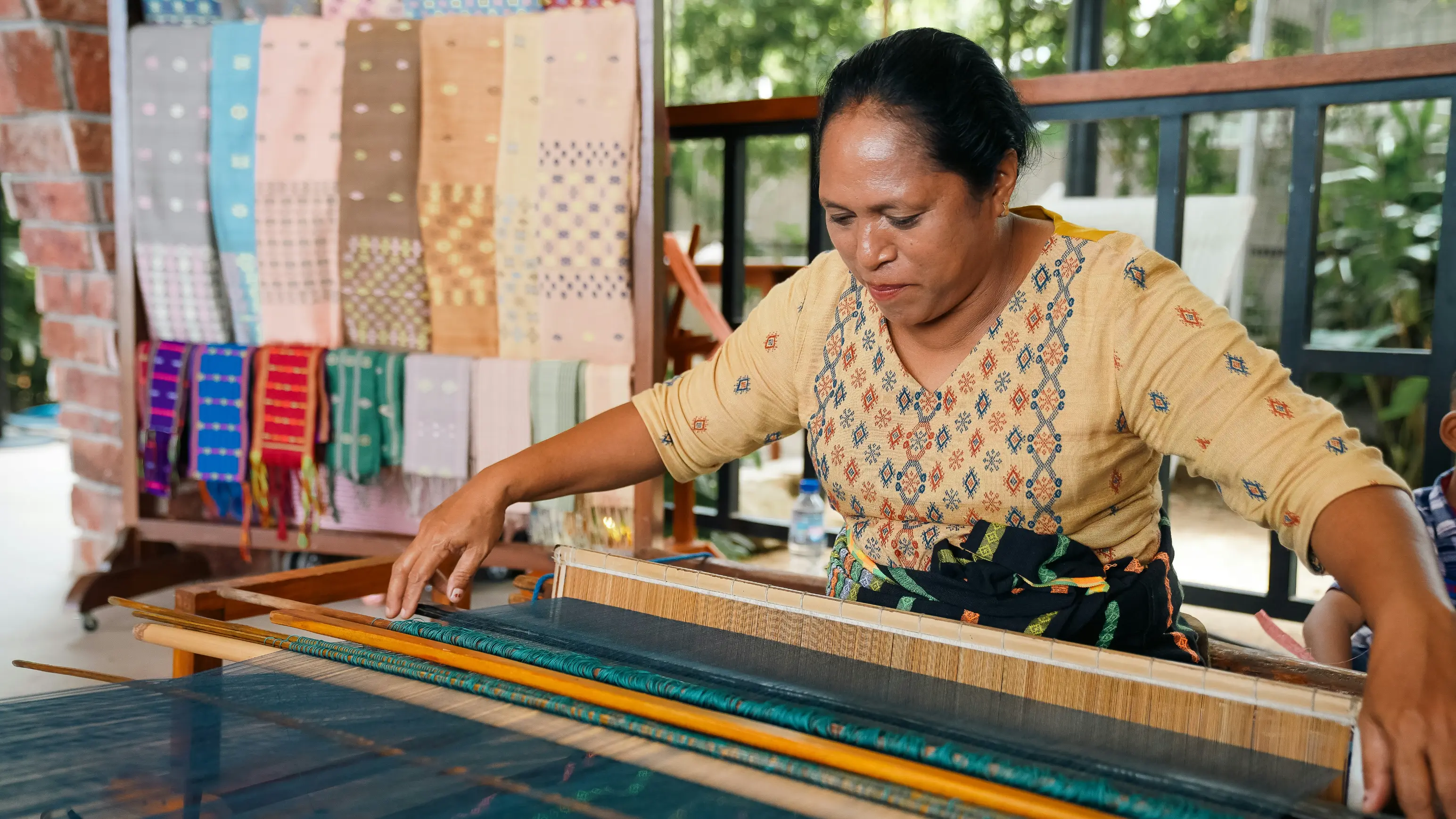
Indonesia’s home decor production is regionally specialised, and understanding this geography helps you evaluate whether a supplier’s claims add up. Java has long-standing terracotta and ceramic traditions, with kiln villages producing pottery using techniques passed down across generations. Bamboo and rattan weaving is concentrated in Java and parts of Bali, drawing on both material availability and long-established weaving skill in those areas. Hand-loomed ikat and other woven textiles come primarily from East Nusa Tenggara, where weaving techniques are typically passed down within families rather than taught in factory settings, and where the pace of production is inherently slower and more artisanal.
A supplier who can speak specifically to which region and workshop your order comes from — rather than describing everything simply as “Indonesian handmade” — is a good early signal that they’re genuinely on top of their own supply chain. If a supplier claims to offer terracotta, bamboo, and hand-loomed textiles all from a single workshop, it’s worth asking more questions, since these are typically distinct regional specialisms rather than a single location’s output.
What to Ask a Supplier Before You Order
Before committing to a first order, it’s worth working through a short set of practical questions:
Which region and workshop does this specific product come from?
What’s your MOQ structure — per SKU, per category, or per container?
What are your standard production lead times once an order is confirmed, and what happens if a run runs late?
Can I see production photos partway through the run, before the container is packed and sealed?
Are your prices quoted FOB, and from which port?
What are your standard payment terms and deposit structure?
How will I be kept updated once the order is in production, and who do I contact if something needs fixing?
A supplier who answers these clearly and specifically, rather than in generalities, is usually one worth building a longer-term relationship with. Vague or deflective answers to any of these — particularly around which workshop a product actually comes from — are worth treating as a signal to look elsewhere or ask more questions before committing.
Start Small, Then Scale
Buyers who get the best long-term terms are rarely the ones who place the biggest first order. Starting with a smaller, mixed-category trial run lets you test quality consistency, packaging, communication, and how the supplier handles any issues that come up — all before committing to full container volumes. Most suppliers who genuinely have their production process under control, including Bali Bhumi, are open to structuring a first order this way, since a smaller trial that goes well is what leads to repeat, larger orders down the line. It’s a far lower-risk way to evaluate a new supplier than committing to a full container on the strength of a catalogue and a few sample photos.
Building the Relationship Over Time
Reliable sourcing isn’t a one-time vetting exercise — the value compounds over repeat orders as a supplier gets to know your quality expectations, your typical order mix, and your seasonal timing. Buyers who treat their supplier relationship as a genuine partnership, rather than a transactional one renegotiated from scratch each time, tend to get better production slots, more flexibility on order timing, and earlier notice of material or pricing changes.
Where This Fits Into Your Buying Process
Sourcing reliably is one part of a wider wholesale buying decision that also includes margin planning and MOQ structure, covered in our complete guide to buying wholesale home decor.
Bali Bhumi makes sourcing from Indonesian artisans simple and dependable for wholesale buyers globally — with consistent quality and clear communication from order to delivery.Contact us for our current range, or browse the catalogue.