The Hidden Carbon Cost of Your Home Decor: Why Material Choice Matters
Every object in your home carries an invisible carbon footprint—emissions generated from raw material extraction through manufacturing, transportation, use, and disposal. Understanding these hidden costs reveals why choosing handcrafted Indonesian home accessories over mass-produced alternatives represents one of the most impactful environmental decisions conscious consumers can make.
What Is Embodied Carbon?
Embodied carbon refers to total greenhouse gas emissions generated across a product’s lifecycle. For home decor, this includes carbon released during material harvesting, processing, manufacturing, packaging, transportation, and eventual disposal. Unlike operational carbon from heating or electricity, embodied carbon is fixed at purchase—your material choices lock in environmental impact, a concept we explore in practical terms in ourbamboo versus plastic comparison.
Most consumers focus on price and aesthetics whilst remaining unaware of carbon costs hidden within supply chains. A cheaper synthetic storage basket might seem economical, but its embodied carbon debt can far exceed a natural bamboo alternative’s lifetime emissions.
Material Extraction Impact
Synthetic home decor begins with petroleum extraction, one of the most carbon-intensive activities on earth. Oil drilling, refining, and plastic polymer production generate on average around 2.9 kg CO2-equivalent per kilogram of plastic produced, according to EU emissions data (European Topic Centre on Waste and Materials in a Green Economy, 2021) — before manufacturing even begins, and before accounting for end-of-life disposal.
Metal furniture requires mining and smelting operations consuming enormous energy. Aluminium production is particularly carbon-intensive: the global average sits at roughly 14.8 kg CO2 per kilogram of metal as of 2023 (per European Aluminium), though this varies enormously by region — European production powered largely by hydroelectricity runs closer to 6.6 kg CO2/kg, whilst coal-dependent production elsewhere can exceed 20 kg CO2/kg. Steel production releases close to 1.9 kg CO2 per kilogram on average, according to the World Steel Association.
Sustainablebamboo home accessories start with harvesting fast-growing grasses that absorbed CO2 during growth. Rather than releasing carbon through extraction, bamboo forests function as carbon sinks. Indonesian artisan communities practice selective harvesting, maintaining these carbon-sequestering ecosystems whilst accessing renewable materials.
Manufacturing Energy Intensity
Industrial manufacturing consumes vast energy, predominantly from fossil fuels. Injection moulding plastics, stamping metals, and factory production lines require constant electricity and heat. Facilities typically operate 24/7, multiplying energy demands.
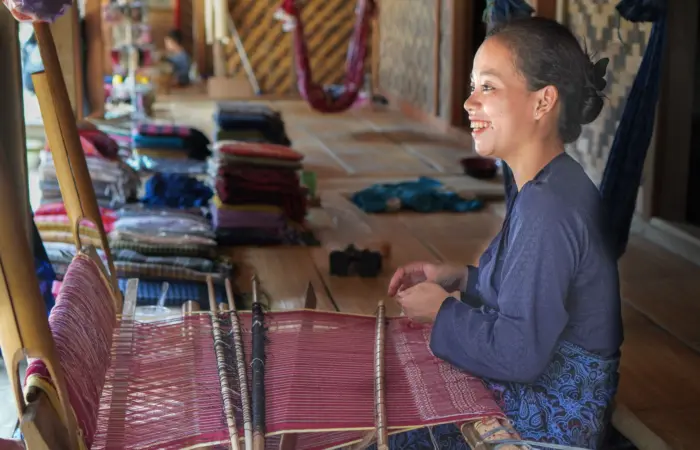
Handcrafted home decor production uses primarily human labour.Indonesian artisan families work during daylight hours using hand tools requiring zero electricity. When processing does require energy—kiln-drying bamboo, for instance—small-scale operations consume a fraction of industrial equivalents. This low-energy crafting dramatically reduces embodied carbon.
Transportation Footprint Variables
Distance alone doesn’t determine transportation carbon. A container ship moving thousands of handcrafted Indonesian pieces generates far less per-item emissions than trucks distributing factory goods across continents. Consolidation matters significantly — one of the reasons shipping and packaging make our list of7 ways artisan pieces reduce your carbon footprint.
However, air freight substantially increases carbon costs — commonly cited industry estimates put it at tens of times the carbon intensity of sea freight per tonne transported. Fast furniture often arrives via air to meet trend cycles, whilst sustainable home design typically ships ocean freight. Verify transportation methods when assessing eco-friendly home decoration claims.
Many ethical brands carbon-offset shipping through verified programmes funding reforestation or renewable energy. These offsets neutralise transportation emissions, making international artisan-made products carbon-competitive with local mass production.
The Durability Factor
Lifecycle carbon accounting must consider use duration. A plastic basket lasting three years effectively carries three times its manufacturing carbon per year compared to identical emissions spread across ten years. Durability fundamentally alters environmental mathematics — this is the same principle underpinning whyhandcrafted pieces offer better long-term value.
Quality bamboo home decor serving 20+ years amortises embodied carbon across decades. Even if initial manufacturing carbon matched synthetic alternatives (which it doesn’t), the extended lifecycle makes natural materials vastly superior environmentally. Durability represents the most overlooked carbon-reduction strategy in home furnishing.
End-of-Life Carbon Impacts
Disposal methods significantly affect total carbon footprints. Landfilled plastic decomposes anaerobically over centuries, releasing methane—a greenhouse gas roughly 25 times more potent than CO2 over a 100-year period. Incineration converts plastic into immediate CO2 emissions plus toxic compounds.
Natural home accessories composting or biodegrading release carbon absorbed during plant growth, creating neutral cycles. No additional greenhouse gases enter the atmosphere—the carbon simply returns from whence it came. This closed loop, the same one behind goodzero-waste home organisation, represents the ideal end-of-life scenario.
Chemical Processing Emissions
Manufacturing often involves chemical treatments releasing potent greenhouse gases. Furniture finishing with synthetic lacquers, fabric treatments with formaldehyde, and plastic stabilisers all contribute to embodied carbon through processing emissions.
Indonesian artisan pieces use traditional natural treatments—plant-based oils, water-based finishes, traditional preservation techniques covered in ournatural material care guide. These methods avoid industrial chemistry’s carbon intensity whilst producing safer, healthier products for your home.
The Replacement Cycle Multiplier
Fast furniture culture compounds carbon costs through repeated replacement. Purchasing five cheap items over twenty years generates roughly five times the manufacturing, packaging, and transportation emissions of one quality piece serving the same period.
This multiplication effect makes trendy, disposable home decor environmentally costly regardless of any individual item’s carbon footprint. Conscious consumption through investment in handcrafted Indonesian home accessories breaks these destructive cycles.
Packaging Carbon Considerations
Excessive packaging generates substantial embodied carbon. Plastic wrap, styrofoam protection, multiple boxes, and printed materials all carry carbon costs. Mass-produced items often over-package to prevent damage during bulk shipping.
Artisan-made products typically use minimal, biodegradable packaging—recycled cardboard, paper padding, natural fibre protection. This packaging itself carries lower embodied carbon whilst biodegrading harmlessly, contrasting with plastic packaging persisting indefinitely.
Supply Chain Complexity
Complex supply chains multiply carbon impacts. Components sourced globally, assembled in one country, finished elsewhere, then distributed internationally create sprawling carbon footprints difficult to calculate or reduce.
Direct relationships with Indonesian artisan communities simplify supply chains dramatically — the same principle behind building a genuinecircular economy at home. Materials sourced locally, crafted in single workshops, shipped directly to distributors—this streamlined approach minimises carbon whilst increasing transparency and accountability.
Carbon Handprint Versus Footprint
Beyond minimising footprints, consider carbon handprints—positive environmental impacts your choices create. Supporting sustainable bamboo cultivation maintains forests sequestering carbon continuously. Fair wages enable artisan families to invest in solar power, efficient cookstoves, and other low-carbon improvements.
Your purchase of eco-friendly home decoration doesn’t merely reduce personal carbon costs—it actively supports carbon-reducing systems in artisan communities, multiplying positive environmental impacts beyond individual product footprints.
Taking Action Through Material Choices
Understanding hidden carbon costs empowers better decisions. Prioritise natural materials over synthetics, handcrafted over mass-produced, durable over disposable. Each bamboo basket chosen over plastic alternatives can meaningfully reduce lifetime emissions when durability and disposal are considered.
This awareness motivates choosing sustainable home textiles and natural home accessories that align environmental impact with aesthetic desires.